Water Quality
A look into GLWA’s water quality standards, testing, and treatment practices.
See GLWA’s ongoing investments that strengthen infrastructure and support regional growth.

How GLWA is preparing for regional challenges through strategic planning and innovation.
A look into GLWA’s research leadership, pilot programs, and forward-thinking water solutions.
An overview of GLWA’s role, mission, and operations, explaining the how and why behind our water and wastewater services.
Meet the individuals behind GLWA, including leadership, staff, and the teams that drive daily operations.

An introduction to GLWA’s treatment plants and operational sites.

Discover how partnering with GLWA helps communities share knowledge, access resources, and strengthen regional water systems.

Information for current and prospective vendors, including procurement processes, requirements, and opportunities.

A resource center providing financial documents, agreements, and investment-related materials.
Imagine you’ve just walked into a model design home. Inside, you get the look, feel and experience of a real home, without ever having to disrupt the houses people are living in—the model home mimics the experience of the real thing.

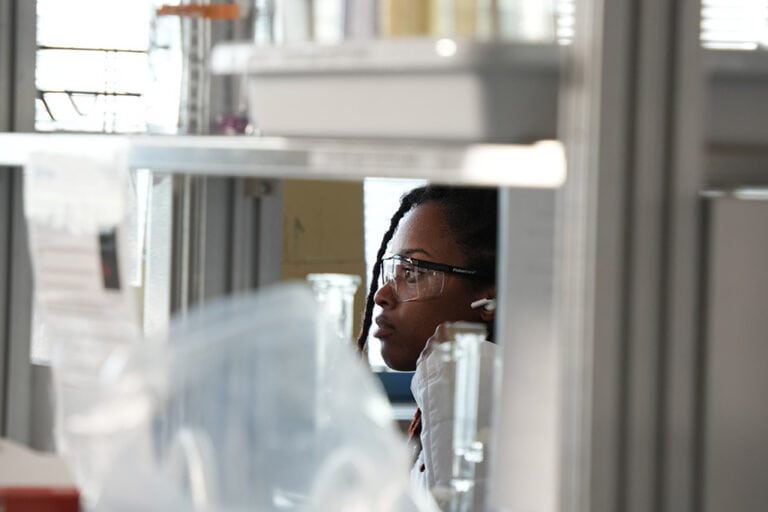
Like a model home, GLWA has two replica water treatment plants called “pilot plants,” that mimic the full-scale, conventional water treatment system that serves nearly 4 million residents in our Michigan service area. Pilot plants allow chemists to conduct research projects, test new technologies, and experiment without disrupting the treatment process and water supply for the community.
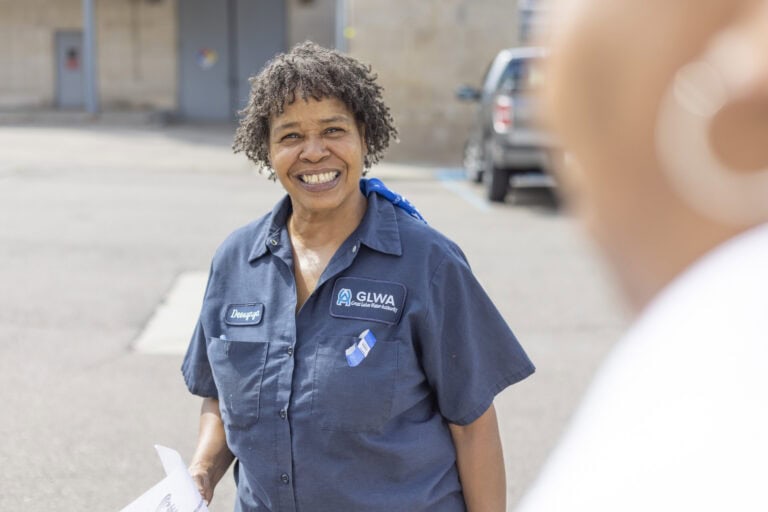
“Public health is number one,” says Dienye Tolofari, GLWA’s Manager of Research and Innovation, “so, if you’re trying to improve your treatment process, you don’t want to use a full-scale plant for your tests and your trials because you don’t want to try out something new and interrupt the flow and the services that you’re providing to the public.”
Pilot plants become especially useful in the case of resolving disturbances to water quality. This is the basis of a major three-year project in the pilot plants, set to begin this fall.
When one of GLWA’s water treatment plants experienced an influx of “Total Organic Carbon”, or TOC, our teams turned to our pilot plants to conduct research and determine how best to optimize our current treatment processes to combat the issue.

“The project we have coming up this fall is to help address issues that we have with total organic carbon in our drinking water.” Dienye said. “we’re going to be trying out treatment processes, different filter media, different types of coagulant and different coagulant doses to help with the removal of organic carbon.”
Results that are determined to be effective and safe after being tested in the pilot plants can then be recommended and implemented in the full-scale plants.
This opportunity for research comes as a great benefit, but Dienye says maintaining a pilot plant is no small feat.
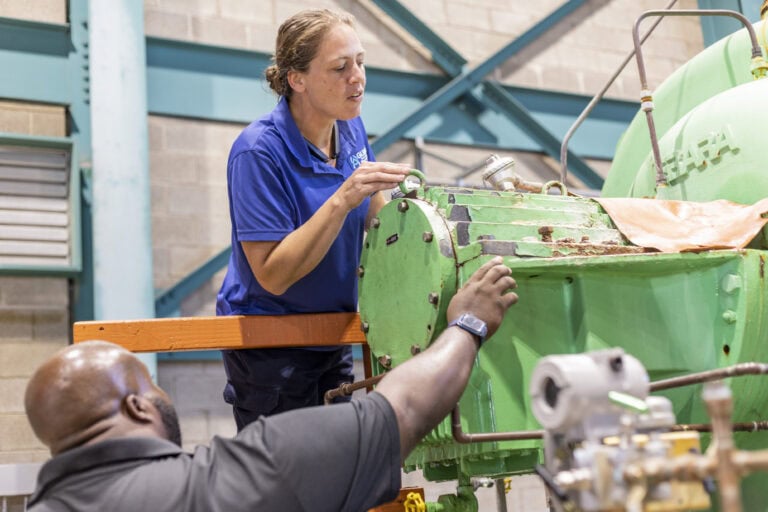
“So many things are required to just keep the pilot plants up and running. It’s not like the full-scale plants where it’s a large system and things can just keep going. If one thing goes wrong, if one instrument is out of place, it affects the whole system.”
Due to the maintenance required, our teams are diligent in keeping the pilot plants operating smoothly, supporting GLWA’s ability to advance our treatment process and addressing variations in water quality when needed.
GLWA currently has projects planned for the next three to five years for our pilot plants, spanning anywhere from 2 weeks, to 6 months, even up to 2 years, targeted at the optimization of our treatment processes.
Offering significant improvements to how we treat water, GLWA’s pilot plants are essential in our commitment to protecting public health and our standards for delivering safe drinking water to the communities we serve for generations to come.