Water Quality
A look into GLWA’s water quality standards, testing, and treatment practices.
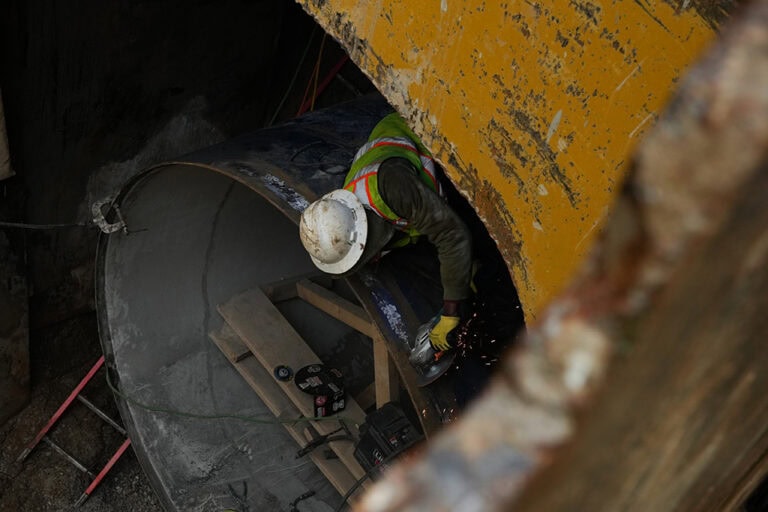
See GLWA’s ongoing investments that strengthen infrastructure and support regional growth.

How GLWA is preparing for regional challenges through strategic planning and innovation.
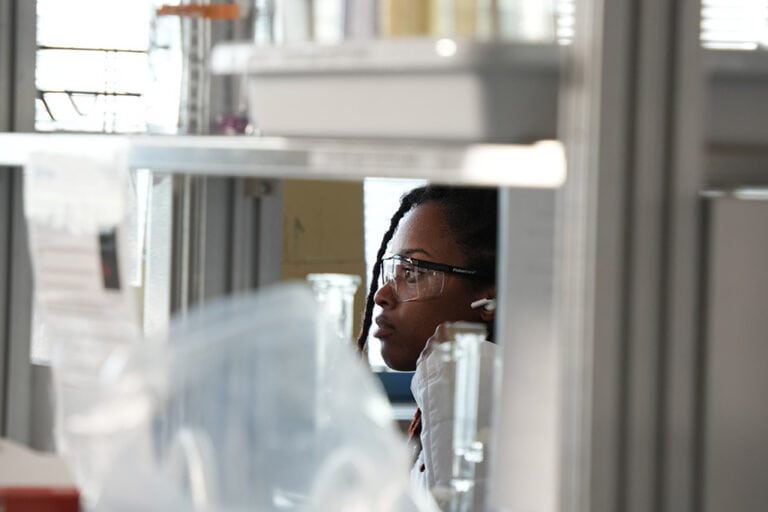
A look into GLWA’s research leadership, pilot programs, and forward-thinking water solutions.
An overview of GLWA’s role, mission, and operations, explaining the how and why behind our water and wastewater services.
Meet the individuals behind GLWA, including leadership, staff, and the teams that drive daily operations.

An introduction to GLWA’s treatment plants and operational sites.

Discover how partnering with GLWA helps communities share knowledge, access resources, and strengthen regional water systems.

Information for current and prospective vendors, including procurement processes, requirements, and opportunities.

A resource center providing financial documents, agreements, and investment-related materials.
GLWA operates and maintains our Combined Sewer Overflows (CSO) and Combined Sewer Overflow control facilities in accordance with our Michigan Department of Environmental Quality (MDEQ) National Pollution Discharge Elimination System (NPDES) permit. This permit is issued once every five years to GLWA by the MDEQ.
As is typical in many established communities, the Great Lakes Water Authority (GLWA) operates a combined sewer system, which means our sewers transport rain and sewer water in the same pipe. A combined sewer overflow (CSO) will at times occur during a significant rain event. A combined sewer overflow may occur during a significant rain event because the collection system rapidly reaches capacity, which increases the risk of flooding and basement backups. To address this risk, the combined overflow is discharged through various points along the Detroit and Rouge Rivers.
Approximately 95 percent of combined sewer overflow passes through a Combined Sewer Overflow (CSO) Control Facility, where it is treated and disinfected to meet the Michigan Department of Environmental Quality’s (MDEQ) strict treatment requirements before discharge.
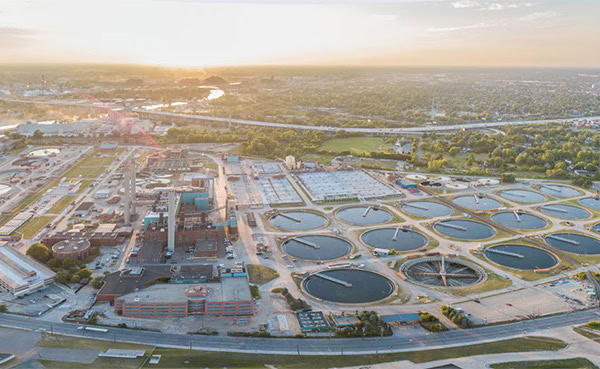
Typically, all sewage is treated at the GLWA Water Resource Recovery Facility (WRRF). However, during those significant rain events when combined sewer overflows occur, approximately 95 percent of the flow that is not treated at the Water Resource Recovery Facility (WRRF) is routed through CSO Control Facilities, which treat and disinfect the water to meet the MDEQ’s requirements for treatment.
The remaining five percent of water that is not sent to the WRRF, or to CSO Control Facilities is discharged at untreated points. Contact with the water during and shortly after overflow events is not recommended and signage is placed at these points to remind the public to avoid such contact.
CSO Control Facilities are mostly found in older sewer systems and together with interceptor sewers provide extra protection during significant rain events. Initially, combined sewer systems were constructed with very large pipes (up to 20 feet wide by 20 feet tall) to prevent flooding and remove waste near homes and neighborhoods by sending flow to nearby water bodies (the Rouge and Detroit rivers). For GLWA, these are referred to as trunk sewers.
Over time, however, it was recognized that the flow in these trunk sewers needed to be treated at a wastewater facility to limit water quality impacts to the nearby water bodies. Therefore, interceptor sewers were built to intercept trunk sewer flow previously going to the river and take it to a wastewater treatment plant, or in our case, a Water Resource Recovery Facility (WRRF). These facilities treat the water to ensure that it meets all MDEQ and EPA water quality requirements before being released back into the environment.
Interestingly, most interceptor sewers are built along rivers because the previous trunk sewers all went straight to the river. This is also how it got its name “interceptor,” because it intercepts the flow from going to the river and takes it to the wastewater treatment facility.
When these interceptors and wastewater facilities were built, however, they didn’t account for the major storms that we see today. What this functionally means is that during significant wet-weather events, the interceptor sewers do not have sufficient capacity to carry all the wet-weather generated flow to the wastewater treatment facility, and therefore still need an outlet to the river to keep homes and basements from flooding with combined sewer water. During significant rain events CSO Control Facilities are used to treat and disinfect excess flow in a manner that meets the MDEQ’s requirements for treatment
Newer sewer systems are constructed with separate storm and sanitary sewers, so they do not have the same capacity challenges that combined systems do when it comes to treating the water in the pipe during wet-weather events.
What we constantly strive for is to keep people’s basements dry during wet-weather while minimizing the impact of any combined sewer overflow events on our waterways.
GLWA operates and maintains nine CSO Control Facilities, as well as 62 untreated discharge points. Of those 62 untreated discharge points, six of them discharge only in the event of an emergency that jeopardizes property (i.e. wide-spread basement flooding). The remainder of the points discharge at varying frequencies. It should be noted that these 62 sites are responsible for approximately 5 percent of total combined sewer overflow discharge volume.
While combined sewer overflow discharge must continue in some form to protect residents’ property and prevent flooding, we are also working on plans to treat more of the untreated discharge through screening and disinfection (at a minimum). Screening means that we remove things like pop bottles, trash, or other items that make it into the sewers and prevent them from being sent to the river. Disinfection means that we kill harmful bacteria in the water.
The only way to completely remove combined sewer overflow discharge is to create separate sewers, dividing storm water and sanitary water. For old systems, the cost of doing this has proven to be incredibly expensive and would put an undue burden on resident’s water bills.
Discharge water from the CSO Control Facilities are screened and disinfected water that meets the MDEQ’s requirements for treatment of Combined wastewater.
Discharge water from the untreated combined sewer overflow discharge points are considered diluted wastewater. There are still elements of wastewater in a discharge that may include debris (leaves, garbage, cans, etc.), bacteria, as well as rain water. Combined sewer overflow discharges also have a great deal of inorganics, such as dirt coming off roadways, during wet-weather events.
You can help minimize debris in the system by throwing trash away rather than littering. If you see leaves blocking a catch basin (drain in the road), clean them up and throw them away. The public can also help to improve overall water quality by minimizing runoff of fertilizer from their property during rainfall (fertilizer has phosphorus, and phosphorus contributes to algae blooms, like those in Lake Erie). When buying fertilizer there will be three series of numbers like 10-15-5. The number 10 in this instance represents the available phosphorus in the fertilizer. The closer to zero this number is, the better for the environment in terms of phosphorus containing water runoff into receiving waters (i.e. the river or lake).
For general information about GLWA’s Combined Sewer Overflow Operations please contact
our Director of Wastewater Conveyance.